Summary
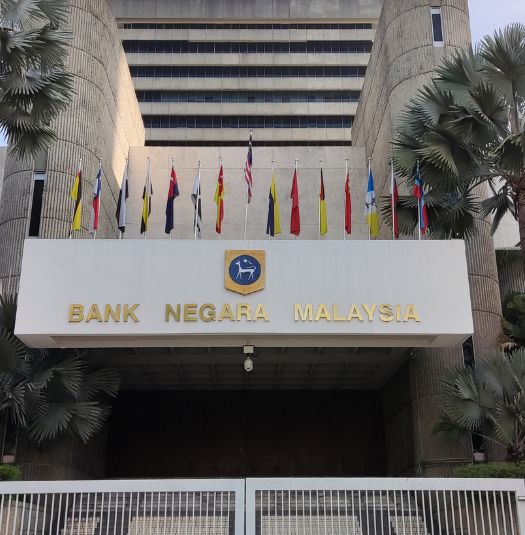
- Bank Negara Malaysia (BNM) confirmed full-year 2026 GDP growth will hover around 5%, stating the economy shows no signs of overheating while policy levers remain focused on demand-driven inflation risks.
- National Economic Action Council (MTEN) task force warned elevated global oil prices could linger for up to two years due to persistent Middle East shipping disruptions and supply constraints.
- MAHA 2026 recorded RM66 million in immediate commercial sales on its opening weekend, setting an ambitious target to secure RM10 billion in total agricultural investment commitments.
Bank Negara Malaysia’s confirmation of a stable 5% growth trajectory provides corporate balance sheets with clear domestic visibility, even as federal economic advisors caution that high global energy prices could weigh on operating costs for up to two years.
The Data Breakdown
- 5.0% Growth Track Confirmed: BNM Governor Datuk Seri Abdul Rasheed Ghaffour noted that H1 expansion momentum will carry full-year 2026 GDP to roughly 5%, backed by resilient electrical and electronics (E&E) export demand and well-contained headline inflation between 1.5% and 2.5%.
- 2-Year Oil Risk Horizon: MTEN Crisis Task Force chief Nurhisham Hussein highlighted that while local fuel supplies remain fully secure through year-end, persistent geopolitical friction and marine transit blockades mean global crude prices may stay elevated through 2028.
- RM10 Billion Agro Capital Target: The Ministry of Agriculture and Food Security aims to mobilize RM10 billion in private sector investment and supply chain modernisations during MAHA 2026, building on RM66 million generated in initial weekend transaction volume.
- Fiscal Spending Adjustments: Federal economic task force guidance indicates potential near-term realignments in public expenditure targets to fund critical water and power infrastructure without altering the broader 2027 fiscal consolidation trajectory.
What This Means for the Bottom Line
1. Corporate Treasury Planning
Central bank reassurance against monetary tightening allows CFOs to maintain baseline cost-of-capital assumptions, though treasury desks must hedge against secondary energy price pass-throughs across local logistics networks.
2. Fleet and Logistics Cost Management
With global oil supply bottlenecks projected to persist over a multi-year horizon, transport operators and manufacturers must accelerate efficiency transitions and fleet modernisations rather than relying on temporary fuel price dips.
3. Agribusiness Capital Deployment
The government’s heavy push for RM10 billion in agro-industrial investments unlocks immediate commercial avenues for technology vendors, cold-chain logistics providers, and automated farming equipment suppliers.
The TopBusiness Bottom Line
Central bank stability provides a solid domestic foundation, but long-term corporate profitability hinges on aggressive energy efficiency and supply chain modernisations.
Stay ahead of the market curve daily with TopBusiness, Malaysia’s premier business and trade news site.
Frequently Asked Questions About AI Project Management Tools For Cross-teams
They combine standard project-management features with AI for tasks such as summarising information, automating workflows, searching company knowledge and preparing updates.
monday.com is our best overall choice, while ClickUp is stronger for all-in-one work management and Asana for structured cross-team coordination.
Yes. The platforms reviewed here are commercially accessible to Malaysian organisations, although pricing, AI allowances and feature availability vary.
Yes, provided the platform solves a clear operational problem without adding more complexity than the team needs.
Not automatically. Switching makes sense when the gains in productivity, automation or visibility justify migration and retraining costs.
Yes. Most leading platforms support cross-functional workflows, shared dashboards, task ownership and integrations that help departments work from the same information. The best choice depends on how closely teams need to coordinate, how complex approvals are and whether technical or client-facing workflows are involved.