
Across news headlines, words such as “growth”, “resilient” and “strong” have repeatedly been used to describe Malaysia’s economy.
And the numbers justify much of that optimism.
Malaysia’s economy expanded by 6% year-on-year in the second quarter of 2026, up from 5.4% in the previous quarter. Investment remains strong, exports are performing well, semiconductor demand continues to support manufacturing, and billions of ringgit are flowing into data centres, cloud infrastructure and other large projects.
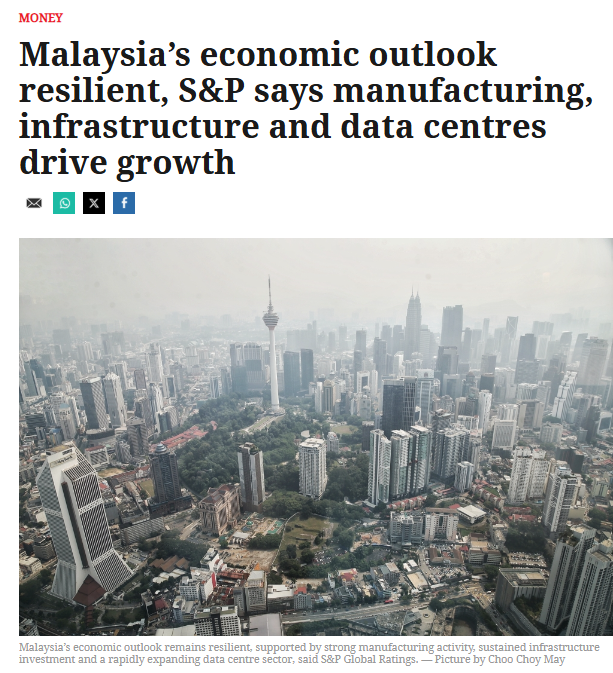
Six per cent is a big number, an impressive one at that.
Yet ask an average SME owner or salaried worker if life feels 6% better and the answer may be much less enthusiastic.
A worker might say: “Prices went up, but my income did not rise by that much.”
A business owner might put it differently: “Sales are okay, but rent, salaries and suppliers all cost more.”
The economy is doing well, but many of the people working inside it do not necessarily feel as though they are doing equally well.
And that’s what we want to talk about.
The 6% Growth Is Real
It is important to establish that the headline growth is not just a statistical illusion, we’re not damping anyone’s effort.
Bank Negara Malaysia said Q2 growth was supported by domestic demand, exports and continued investment in structures, machinery and equipment.
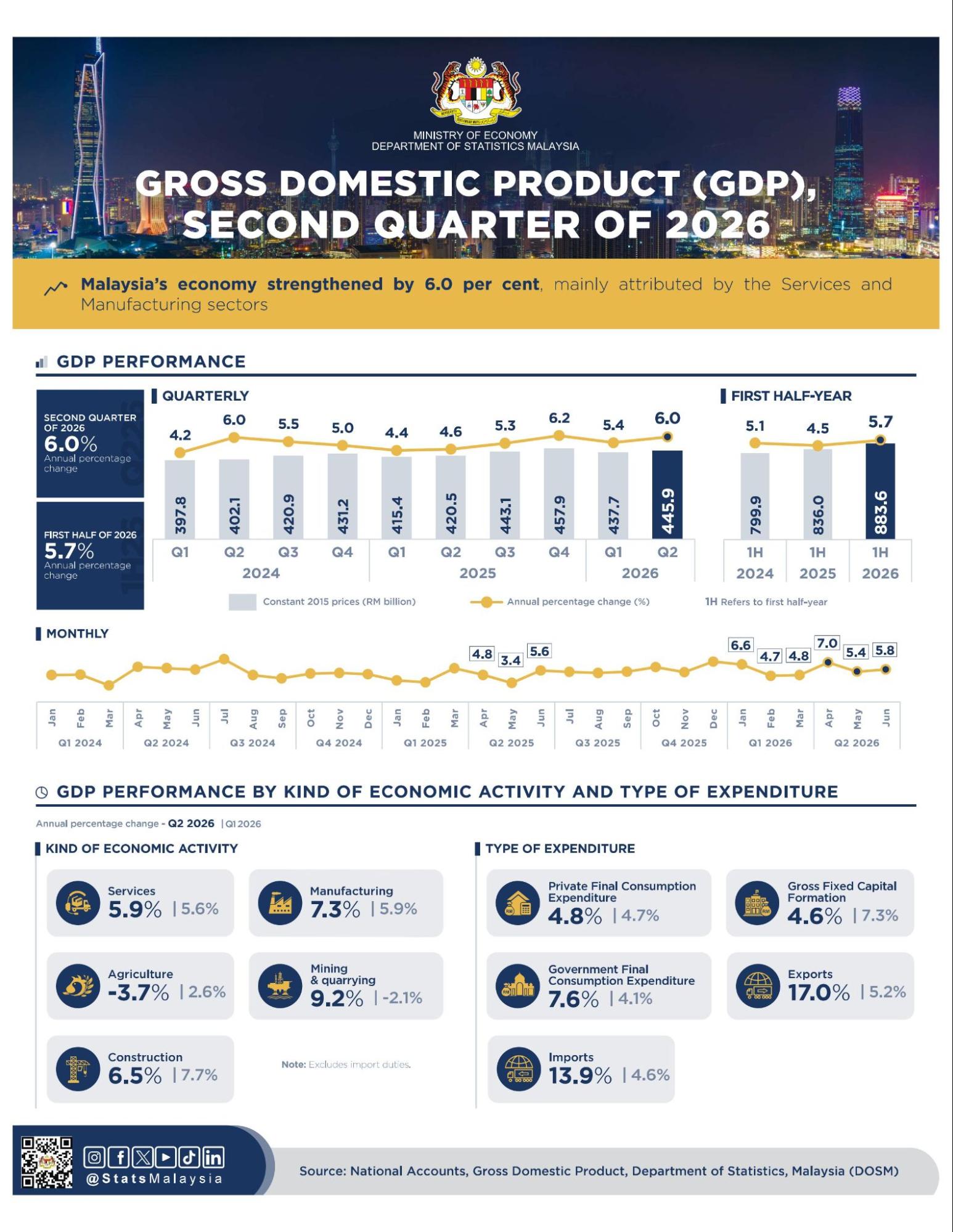
Image taken from DOSM
Malaysia is also benefiting from several major investment themes, including:
- Data centres and cloud infrastructure
- Semiconductor and E&E demand
- Advanced manufacturing
- Infrastructure development
- Foreign direct investment
- Services exports
In the first half of 2026, Malaysia recorded RM218.5 billion in approved investments.
Data centre and cloud computing projects alone accounted for around RM95.8 billion. That is a substantial amount of capital flowing into the economy.
But Where Is the Growth Actually Landing?
A RM10 billion data centre project is excellent news for Malaysia. It creates demand for construction, engineering, utilities, equipment, land and specialised services.
But it does not immediately make the average kopitiam, tuition centre, salon, independent retailer or small manufacturer busier.
Who Feels the Growth First?
Growth Driver | Immediate Beneficiaries | Wider Spillover |
Data centres | Developers, engineers, contractors | Local services, suppliers, property |
Semiconductor exports | Manufacturers, exporters | Logistics, vendors, workers |
Large FDI projects | MNCs, industrial parks, major suppliers | Supporting SMEs |
Infrastructure spending | Construction firms, materials suppliers | Nearby businesses and communities |
Domestic consumption | Retailers, restaurants, local services | Broader economy |
The benefits can spread but they do not spread equally or immediately.
A semiconductor exporter in Penang and a café owner in Seremban may technically operate in the same 6% economy, but their experience of that economy can be very different.
Business Lending Tells a Similar Story
The lending figures provide another clue, outstanding business loans grew 7.2% in Q2 2026.
However, SME lending increased by only 4.2%, down from 5.2% in the previous quarter.
Bank Negara also noted that the broader increase in business lending was driven mainly by non-SMEs.
This does not mean smaller businesses are in trouble, but it does suggest that the benefits of the current expansion are reaching larger businesses more quickly.
Large companies generally have better access to:
- Major investment projects
- Bank financing
- Export markets
- International supply chains
- Government incentives
- Large procurement contracts
For many smaller businesses, the situation is much simpler because their main economic indicator is still: Are customers spending more?
Low Inflation Does Not Mean Prices Are Low Again
Malaysia’s headline inflation rate was around 1.8% in July 2026. Yet lower inflation does not mean prices have returned to where they were several years ago.
It simply means prices are rising more slowly.
If something cost RM10, then increased to RM11, slower inflation might mean it rises to RM11.20 instead of RM11.80. It does not fall back to RM10, sad news for consumers.
Wages Are Rising, But That Is Only Part of the Story
It would also be inaccurate to claim that salaries are not growing. They are at a snail’s pace, and we don’t know about your salary situation, but we reckoned it’s not exactly skyrocketing growth.
The median monthly wage for formal-sector employees reached RM3,027 in March 2026, and formal-sector wages were also up year-on-year in late 2025.
A worker can receive a reasonable pay increase while still feeling financially stretched because several years of higher food, housing, transport and household costs have already pushed up monthly commitments.
More income does not always translate into noticeably stronger purchasing power, if income only increases because of prices, then that just evens it out.
Is Malaysia Becoming a K-Shaped Economy?
There are certainly elements of one. Some parts of the economy are advancing much faster than others.
“A K-shaped economy is one where some industries, businesses or income groups grow strongly while others stagnate or fall behind.”
At the stronger end, Malaysia has:
- Data centres
- Semiconductor exports
- High-value manufacturing
- Large foreign investments
- Technology and engineering jobs
At the same time, many smaller businesses remain dependent on local consumer spending, where customers are still cautious about prices.
Still, describing Malaysia simply as a K-shaped economy risks oversimplifying the situation.
Large investments can eventually create opportunities for local contractors, logistics companies, restaurants, professional services, maintenance providers and other SMEs. It’s cascading, like a tightly-knitted economy should.
GDP Was Never Designed to Measure How Rich People Feel
GDP measures economic activity, and for our sake as journalists, it just makes the headlines that much juicier, making people go “wow Malaysia’s GDP naik so much!”.
It does not directly measure whether:
- Salaries feel sufficient
- Business margins improved
- Rent became easier to pay
- Households have more disposable income
- SMEs can afford to hire
- Customers feel confident spending
Workers receive wages. Business owners earn profits. Investors receive returns. Governments collect taxes.
“But a bigger economic pie does not automatically mean everyone gets a bigger slice.”
What Would Make Malaysians Actually Feel the Growth?
Malaysia has already shown that it can attract large-scale investment, but if it’s all at the top and trickle-down economics doesn’t do it jobs, then nobody below the large MNC feels it.
To put it bluntly, rather than going to the capital, the flow should go back to workers and labourers.
Better-Paying Jobs
While easier said than done, Malaysia needs more roles that deliver meaningful wage growth, not just increases that barely match rising costs.
There is already debate over whether Malaysia’s minimum wage should eventually rise to RM3,100.
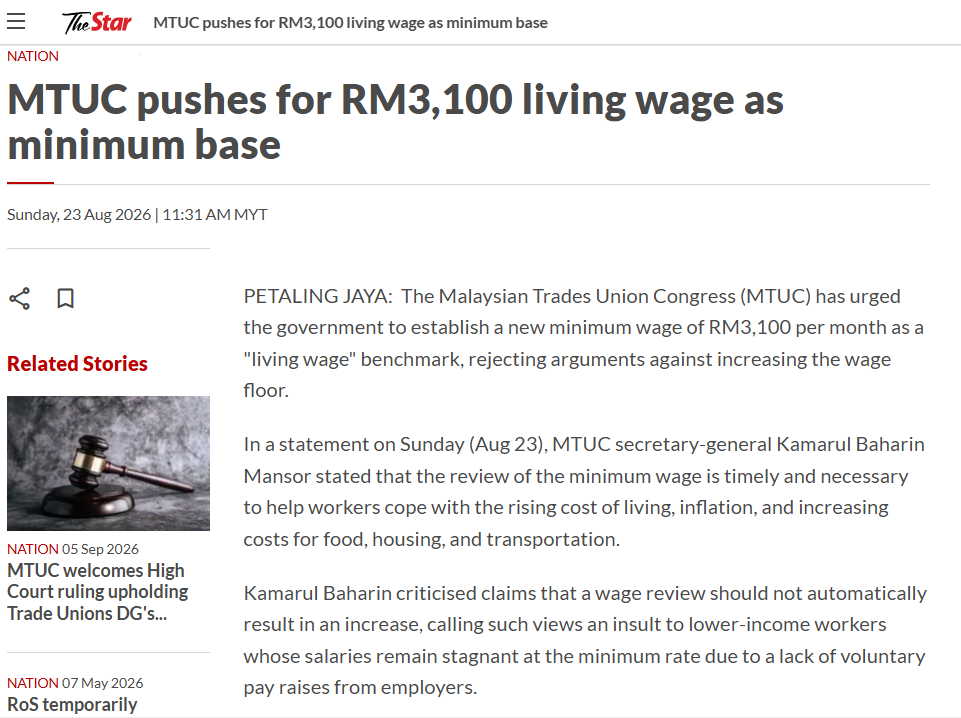
MTUC has proposed the figure ahead of the next statutory wage review, while employer groups such as FMM have warned that an immediate jump from RM1,700 could put significant pressure on business costs.
Stronger SME Participation
Local companies need opportunities to become vendors, suppliers and service providers to the industries attracting new investment.
That depends more on the government making sure overseas investors involve local manufacturers or suppliers to be part of the supply chain but we’re making strides.
Higher Productivity
Malaysia’s labour productivity per hour worked increased 5.5% in Q2 2026. That is good news because productivity is ultimately what allows businesses to sustainably pay workers more.
But it also raises a more question. If workers are producing more value, how much of that additional value eventually flows back into wages?
That is of course, up to businesses to decide.
More Local Spillover
Large projects create greater economic value when more of their spending circulates through Malaysian companies.
The Numbers Tell Two Different Stories
Indicator | Headline Story | Everyday Reality |
GDP growth | Economy expanding strongly | “My life feels mostly the same.” |
Approved investment | Billions flowing into Malaysia | “Does any of this reach my business?” |
Inflation | Price growth has slowed | “Things are still expensive.” |
Wage growth | Salaries are increasing | “My expenses rose too.” |
Business lending | Credit is expanding | “Financing still feels tight.” |
Strong exports | Trade is performing well | “Customers are still cautious.” |
We believe most folks reading this will be on the right side of this table, adding an extra RM1.50 for an egg on our meals can mean breaking the daily budget you set for yourself.
Business owners need to grapple with rising raw material costs and supply trade disruption while the average worker is just working away with little to no salary increment.
Yet it’s not all doom and gloom and if you’re in the sector that is booming like semiconductor or data centres, then congrats! just remember to support your local mom and pop stores yeah?
Ying Guo Kai is an editor at Topbusiness, the leading business news site in Malaysia